
Why Your Website Isn’t Ranking on Google (And How to Fix It)
You launch a page on your website. You optimise the title. You include the keywords you think people are searching for.
And then… nothing happens.
Weeks pass. Sometimes months. Your page barely appears in search results for phrases related to your business, while competitors seem to occupy the top spots no matter what you do.
This is one of the most common frustrations businesses face with SEO.
But the truth is that websites rarely fail to rank because of one small mistake. In most cases, the problem sits in a much larger pattern involving how search engines evaluate content, authority, and relevance.
Once you understand those patterns, diagnosing ranking problems becomes far more straightforward.
The Short Answer: Most Websites Fail to Rank for One of Four Reasons
If a page on your website is not ranking on Google, the issue almost always falls into one of four categories.
Either:
- Google cannot properly access or index the page
- the content is not strong or relevant enough for the search
- the website lacks authority compared with competitors
- or the page is targeting the wrong search opportunity.
Many SEO articles present long lists of possible causes, but most of those causes ultimately fit inside these four buckets.
Understanding which category your website falls into is the key to solving the problem. Once the underlying issue is clear, the path to improving visibility becomes much easier to identify.
Before looking at those categories in detail, it helps to understand why Google behaves this way in the first place.
Why Google Doesn’t Rank Pages Just Because They Exist
Search engines are not trying to list every page that mentions a keyword. Their goal is to surface the pages that are most useful, trustworthy, and relevant for a particular search.
When someone enters a query into Google, the search engine compares thousands of possible pages and evaluates which ones deserve to appear at the top of the results.
To make that decision, Google considers signals such as:
- how clearly the page answers the search query
- how authoritative the website is within the topic
- how users interact with the page
- how the page relates to other content on the internet.
That means ranking well in search results is not simply about publishing a page with the right keywords. You're forgetting that the page must compete with other pages covering the same topic.
What we see with websites that are struggling to rank is that they aren't necessarily doing something “wrong”. They are simply competing against pages that have stronger authority, deeper content, or better alignment with the search intent.
This is also why SEO often takes time to produce noticeable results. Search engines need to crawl, index, and evaluate pages before determining how they should rank compared with competitors.
If you want a deeper explanation of how SEO timelines work and why progress can take multiple months, you can read our guide on how long SEO takes in NZ.
Understanding that competitive context makes it much easier to identify what is preventing a page from ranking.
Problem 1: Google Can’t Properly Access or Index the Page
Before a page can rank in search results, Google first needs to discover it, crawl it, and add it to its index.
If any part of that process fails, the page may never appear in search results at all.
This is why one of the first things to check when a page is not ranking is whether Google has actually indexed it. Even well-written pages won't rank if search engines cannot access or understand them properly.
And there's some common issues that prevent this from happening.
Sometimes a page is accidentally blocked from indexing through a noindex tag or a configuration in the site’s robots.txt file. These settings are useful for controlling which pages appear in search results, but if applied incorrectly they can hide important pages from Google entirely.
In other cases, the page exists but Google struggles to discover it. This often happens when a page is poorly connected within the website’s structure. Pages that have few internal links pointing to them can become effectively invisible to search engines.
Technical factors can also play a role. Extremely slow pages, broken redirects, or complex JavaScript rendering can make it harder for search engines to crawl and process a page correctly.
These issues are not always obvious from the outside. A page might load perfectly in a browser while still presenting problems for search engine crawlers.
That's why confirming that a page is indexed and crawlable is usually the first step in diagnosing ranking problems. If Google cannot access the page properly, no amount of content optimisation will solve the issue.
Problem 2: The Content Isn’t Strong or Relevant Enough
Once a page is indexed, the next question becomes whether the content is strong enough to compete.
Google’s goal is to show users the most helpful and relevant answers to their search. If they just showed whatever they could find randomly, Google wouldn't be as popular as it is today, that's why if multiple pages exist on the same topic, the search engine will decide which one provides the best experience for the person searching.
Pages that struggle to rank often fall short in one of three ways.
The first is thin or shallow content. If a page covers a topic only briefly while competing pages provide deeper explanations, examples, and supporting information, Google may favour those more comprehensive resources.
The second issue is generic content. Pages that repeat widely available information without adding new insight or perspective tend to blend into the background of the search results. Search engines are increasingly good at recognising when multiple pages offer essentially the same value.
The third issue is search intent mismatch. Sometimes a page targets a keyword but does not actually answer the question behind the search.
For example, someone searching for “best accounting software” is likely of commercial intent as they're looking for comparisons or recommendations. A page that only explains what accounting software is would not satisfy that intent, even if it contains the right keywords.
When this happens, your pages may appear in search results briefly before being pushed down by pages that better match what users expect to find.
Strong SEO content usually succeeds because it clearly solves the searcher’s problem while offering depth that competing pages do not.
Problem 3: Your Website Lacks Authority in the Topic
Even well-written pages can struggle to rank if the website behind them lacks authority.
Search engines evaluate not only individual pages but also the credibility of the entire domain. A website that consistently publishes useful, well-structured content about a particular topic is more likely to be trusted than a site that has only one isolated page on that subject.
Authority is influenced by several signals.
One of the most important is how other websites reference and link to your content. When reputable websites link to a page, it acts as a signal that the content is worth paying attention to.
Another factor is topical depth. Websites that build multiple pages around related subjects gradually develop stronger authority in that area. Over time, search engines begin recognising the site as a credible source for those topics.
Age and historical performance can also contribute. Older domains with a consistent publishing history often have an advantage because search engines have more data about how their content performs.
This is one of the reasons SEO timelines vary so much between websites. An established domain with strong topical content may begin ranking much faster than a new website starting from scratch.
Authority is rarely built overnight, but once it begins to accumulate it can significantly improve how a website performs in search results.
Problem 4: Your Page Is Targeting the Wrong Opportunity
Sometimes a page is indexed, technically sound, and even reasonably well written - but it still struggles to rank.
In these situations the issue is often not the page itself, but the search opportunity it is targeting.
One common problem is trying to rank for keywords that are far more competitive than the website’s current authority allows. Established brands with large content libraries and strong backlink profiles often dominate these searches, making it difficult for newer or smaller websites to compete immediately.
Take us for example. SEO agencies with bigger platforms rank easier for more competitive keywords such as "SEO NZ" or "I need SEO". Whereas it's easier for us to rank for "Why isn't my website ranking?" - See what we're doing here?
Anyways - Continuing on.. another issue is search intent mismatch.
Search intent refers to what the person searching actually expects to find. If someone searches for “best project management software”, they are probably looking for comparisons, reviews, or recommendations. A page explaining the definition of project management software would not match that intent, even if it contains the same keywords.
Google’s ranking systems are designed to prioritise pages that best satisfy the searcher’s goal. When a page targets a query but does not deliver the type of information users expect, it struggles to maintain strong rankings.
There is also a structural issue that affects many websites: keyword cannibalisation.
This happens when multiple pages on the same website attempt to rank for the same search query. Instead of strengthening the site’s authority, those pages compete with each other, making it harder for Google to determine which page should appear in the results.
In these cases, the solution is not just improve one page. It involves restructuring the content so that each page clearly targets a distinct topic or search intent.
Choosing the right opportunities is a fundamental part of SEO strategy. Targeting achievable searches first allows a website to build authority and momentum before competing for more difficult keywords.
How to Diagnose Which Problem You Actually Have
If your website is not ranking on Google, the most productive step is identifying which category of problem applies.
A simple diagnostic process can usually narrow it down.
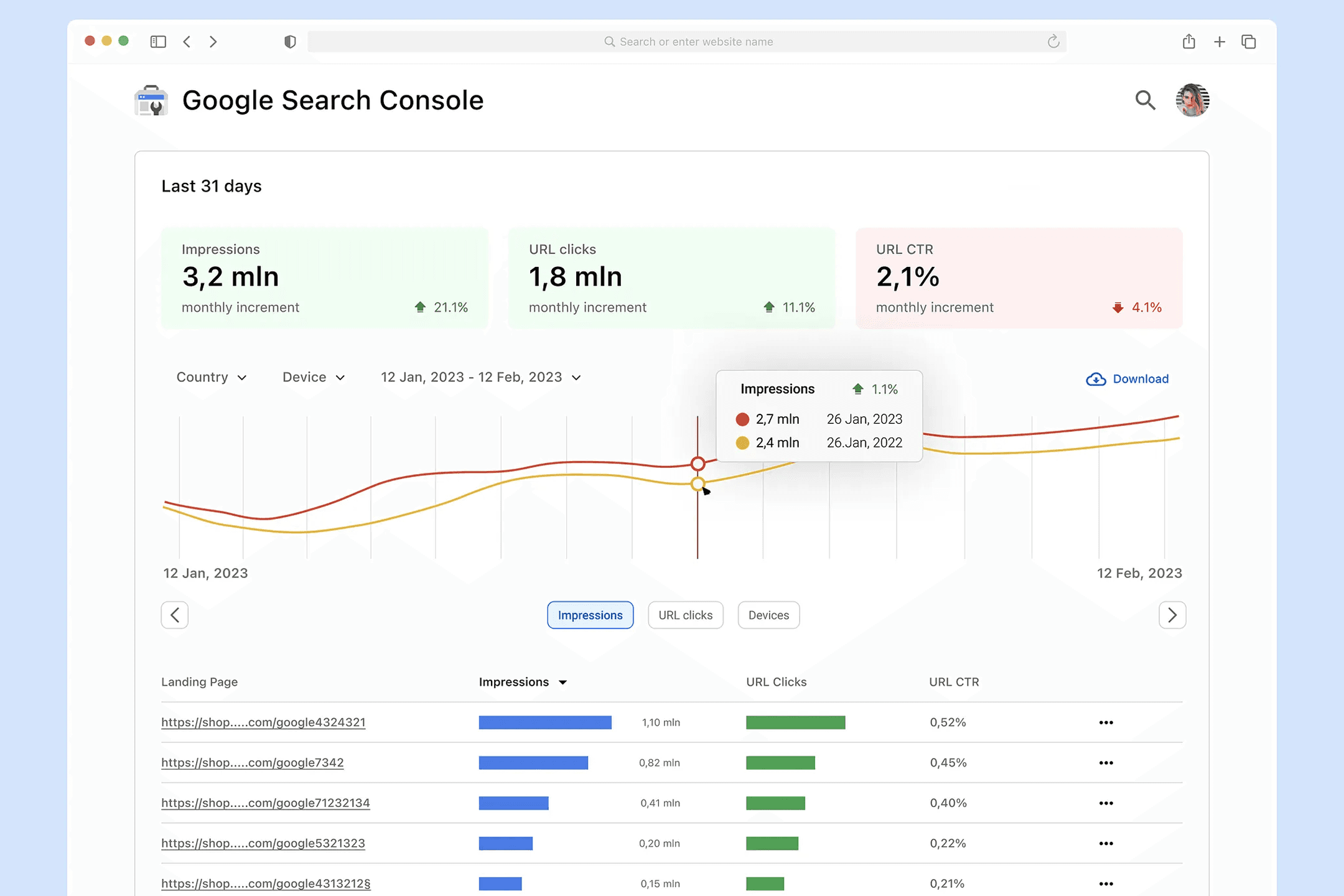
First, check whether the page is indexed. You can do this by searching for the page URL in Google or reviewing indexing reports in Google Search Console. If the page does not appear, the problem is likely related to crawlability or indexation.
If the page is indexed but ranking extremely low, the next step is evaluating the strength of the content compared with competing pages. Look at the top results for the same query and ask whether those pages provide more comprehensive or more helpful information.
If the content appears competitive but the site still struggles to rank, the issue may be authority. Compare your website with the top-ranking domains. Are they well-established brands with large content libraries and strong backlink profiles? If so, the strategy may need to focus on building topical depth and credibility before targeting the same queries.
Finally, consider whether the page is targeting the right search opportunity. If the keyword is highly competitive or the page does not match the search intent, adjusting the topic or approach may produce better results.
This process often reveals that ranking problems are not random. They usually stem from one of the structural issues discussed earlier.
Another quick diagnosis you can do: Use our Free Website Health Analysis tool to scan your site in roughly 2 minutes.

Other Reasons Your Website Might Not Be Ranking
Before we get into those reasons, there's an important lesson I want to convey first.
First, remember what we just covered: The strength of the content compared with competing pages.
And secondly, many existing SEO articles that cover why websites don't rank only present long lists of possible reasons a website may not rank.
Not only is it important to look at what is working, it's important to strengthen. And our article here was made to do just that.
Below you'll find a list of other reasons hurting your websites ability to rank, but to strengthen our position I've chosen 4 categories and discussed them in deeper detail.
Anyway, lesson over!
So, what are the other reasons your website might not be ranking:
- recently published pages that have not yet been fully evaluated by search engines
- weak or unclear title tags and meta descriptions
- duplicate pages targeting the same topic
- poor internal linking that hides important pages from crawlers
- slow page loading speeds
- JavaScript rendering issues that prevent search engines from understanding content
- orphan pages that are not connected to the rest of the site
- thin category or service pages
- inconsistent site architecture
- outdated content that competitors have improved upon
- weak backlink profiles compared with competitors
- poor mobile usability
- limited topical coverage around the subject.
These issues are not always the primary reason a page fails to rank, but they can contribute to weaker performance when combined with other factors.
What to Do If Your Website Isn’t Ranking
Once you understand the possible causes, improving search visibility becomes much more practical.
The first step is ensuring that Google can properly access and index the page. Confirm that the page is crawlable, linked internally within the site, and not blocked by indexing directives.
Next, evaluate the page against competing results. Look at the top-ranking pages for the same query and identify what they do better. Do they cover the topic in more depth? Do they provide clearer answers or more useful examples?
Strengthening content so it clearly satisfies the searcher’s intent is often one of the most effective ways to improve rankings.
It is also important to review the broader structure of the website. Pages that support each other through internal linking and related content tend to build stronger topical authority than isolated pages.
Finally, focus on opportunities where the website can realistically compete. Targeting relevant searches with achievable competition levels allows authority to build gradually, creating a stronger foundation for future growth.
SEO improvements tend to compound over time, especially when technical health, content quality, and site structure all support the same goal.
The Real Question: What Is Holding Your Website Back?
If your website is not ranking on Google, the issue is rarely a mystery once the underlying factors are examined.
In most cases the problem relates to indexation, content strength, authority, or strategic targeting. Identifying which of these applies is the key to developing an effective SEO strategy.
If you want to understand how these factors affect your website specifically, you can explore our search engine optimisation services to see how we approach diagnosing search visibility issues.
And if you would like a clearer picture of why your website may not be ranking and what opportunities exist within your market, you can try our Website Health Checker Tool or book a consultation and we can walk through your site and competitors together.
Understanding the root cause is usually the first step toward improving visibility and building sustainable organic growth.
Frequently asked questions: