SEO vs Google Ads: Which Is Better for NZ Businesses?
The Short Answer: SEO and Google Ads Solve Different Problems
Many businesses approach digital marketing with the same question: Should we invest in SEO or run Google Ads?
It’s a reasonable question, but it’s often framed the wrong way. SEO and Google Ads are not really competing strategies. They solve different marketing problems at different stages of growth.
Google Ads is designed for speed. You can launch a campaign and start appearing in search results almost immediately. This makes it useful when a business needs traffic or leads quickly.
SEO works differently. Instead of paying for visibility, it focuses on improving your website’s ability to rank organically in search results. That process usually takes longer, but it can produce consistent traffic without paying for every click.
Because these strategies operate on different timelines, the real decision is rarely “SEO or Google Ads”. In many cases the better question is when each strategy makes sense and how they can work together.
What SEO Actually Does
Search Engine Optimisation (SEO) focuses on improving how a website appears in organic search results.
When someone searches for a product, service, or question on Google, the search engine evaluates thousands of pages to determine which ones best match the query. Pages that demonstrate strong relevance, authority, and quality are more likely to appear near the top of those results.
SEO works by improving several factors that influence those rankings, including:
- the structure and technical health of a website
- the quality and relevance of its content
- internal linking between pages
- external signals such as backlinks and authority.
When these elements align well, a website can begin appearing consistently in search results for relevant topics. Over time this visibility can generate a steady stream of organic traffic.
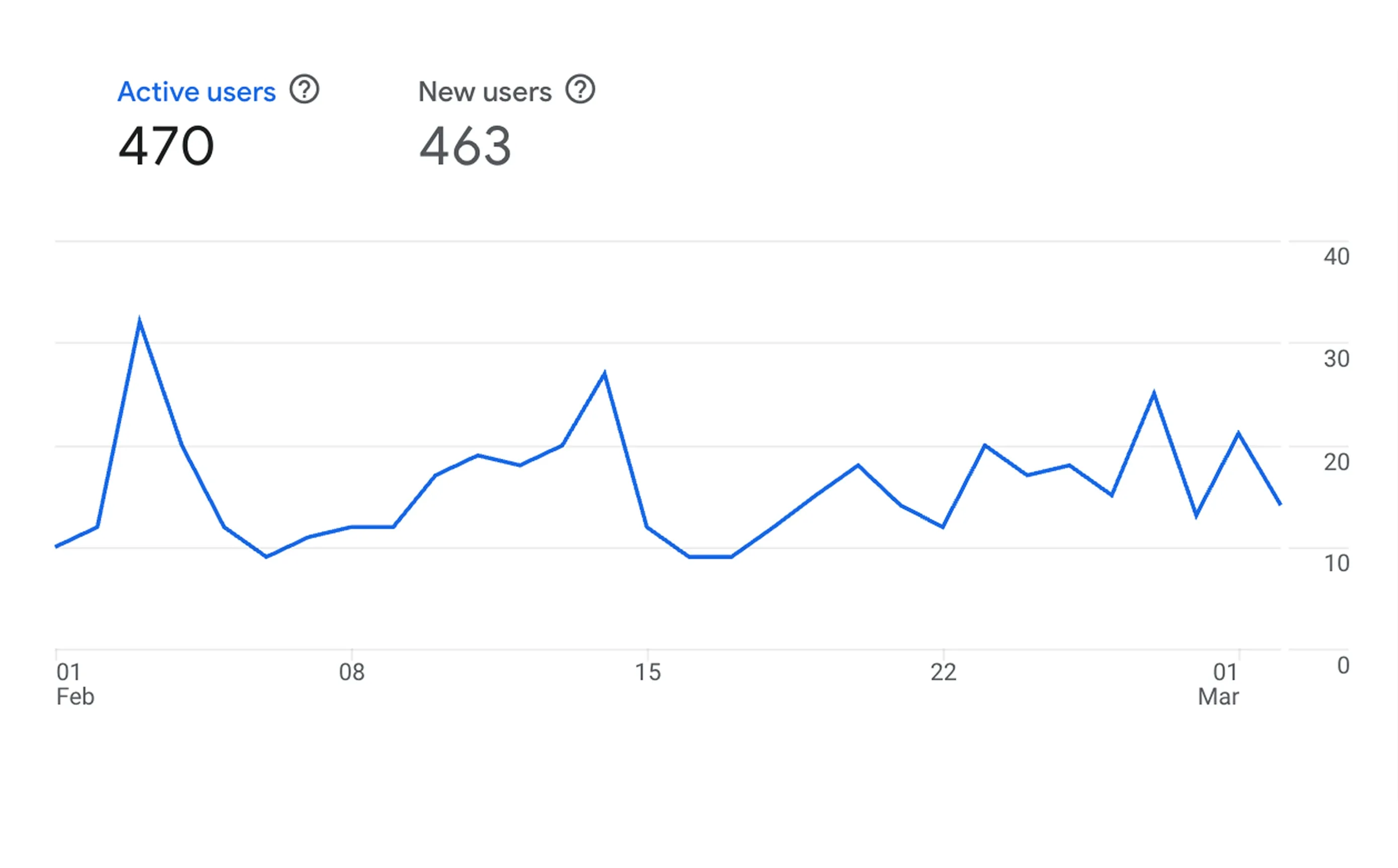
The key characteristic of SEO is that it tends to compound over time. As a website builds authority and publishes more relevant content, its ability to rank across related topics usually improves as well.
However, this process is rarely immediate. Search engines need time to crawl, index, and evaluate new pages before determining where they should rank compared with competing content.
If you want a deeper explanation of how that timeline works, you can read our guide on how long SEO takes in NZ.
What Google Ads Actually Does
Google Ads operates on a different model entirely.
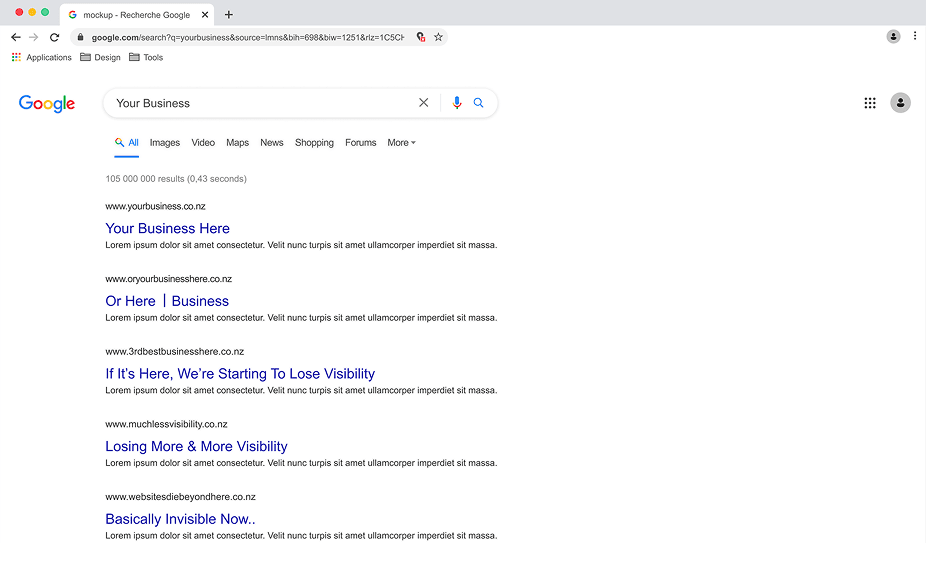
Instead of trying to rank organically, businesses pay to appear in sponsored search results for specific keywords. When someone searches for a term related to those keywords, the advertisement can appear above or alongside the organic results.
The main advantage of this system is speed. Once a campaign is launched and approved, a business can begin receiving traffic almost immediately.
Google Ads works through an auction system where advertisers bid on keywords. When a search occurs, Google evaluates the bids along with factors such as ad quality and relevance to determine which ads appear and in what order.
Businesses are typically charged each time someone clicks on the advertisement. This is why the model is often described as pay-per-click (PPC) advertising.
The main benefit is predictable and controllable traffic. If a campaign performs well, increasing the advertising budget can often generate more clicks and leads.
However, there is an important trade-off: when advertising spend stops, the traffic from that source stops as well.
The Key Differences Between SEO and Google Ads
Although both strategies aim to increase visibility in search engines, they operate very differently.
Speed of Results
SEO:SEO builds visibility gradually as search engines crawl, evaluate, and rank your content. It can take 3+ months before significant improvements appear.
Google Ads:Ads can begin generating traffic almost immediately once a campaign launches.
Cost Structure
SEO:SEO usually involves ongoing investment in content, technical improvements, and authority building rather than paying for individual clicks.
Google Ads:Ads operate on a pay-per-click model, meaning you are charged every time someone clicks your advertisement.
Longevity of Traffic
SEO:Once a page ranks well, it can continue generating traffic without paying for every visitor.
Google Ads:Traffic generally stops when advertising spend stops.
Competition
SEO:Competition is based largely on content quality, authority, and how well your page answers the search query.
Google Ads:Competition is driven by bidding auctions, ad quality, and keyword demand.
Long-Term Value
SEO:SEO tends to compound over time as your website builds authority and expands its presence in search results.
Google Ads:Ads are effective for immediate traffic but rely on continuous budget to maintain results.
Typical Costs: SEO vs Google Ads
Another common question businesses ask when comparing SEO and Google Ads is how the costs differ.
The answer depends on a few different factors, including industry competition, marketing goals, and the scale of the campaign.
SEO usually operates as an ongoing investment. Businesses usually allocate a monthly budget for improving technical performance, creating content, building authority, and expanding their search visibility. While this investment can take time to produce noticeable results, the long-term benefit is that organic traffic can continue even after the initial work is completed.
Google Ads follows a different model. Costs are typically based on cost per click which means the business pays whenever someone clicks the advertisement. In highly competitive industries, individual clicks can become expensive, especially when multiple advertisers are bidding for the same keywords.
Because of this structure, advertising campaigns can generate leads quickly but require continuous budget to sustain traffic.
For many businesses, the difference comes down to time horizon. Google Ads prioritises immediate visibility, while SEO focuses on building a long-term presence in search results.
When Is SEO the Better Strategy?
SEO tends to work best for businesses that are thinking beyond immediate leads and are focused on building sustainable visibility in search results.
Because organic rankings can generate traffic continuously once they are established, SEO is often well suited for companies that want to create long-term growth rather than relying entirely on paid advertising.
SEO can be particularly effective when:
- people regularly search online for the services or products you offer
- the business wants to reduce long-term marketing costs per lead
- building brand authority in an industry is important
- the website can support ongoing content and optimisation.
For example, industries such as professional services, construction, consulting, and local services often benefit from SEO because potential customers frequently search for providers online.
When a website begins ranking consistently for relevant searches, it can attract visitors month after month without paying for every individual click.
The main trade-off is time. SEO rarely produces immediate results, which is why it works best for businesses that are willing to invest in long-term marketing growth.
When Is Google Ads the Better Strategy?
Google Ads is often the better option when a business needs immediate visibility.
Because ads can begin appearing in search results shortly after a campaign launches, they provide a way to generate traffic and enquiries quickly. This makes them useful in situations where waiting several months for SEO momentum is not practical.
Google Ads can be particularly useful when:
- launching a new business or service
- entering a competitive market
- promoting seasonal offers or limited-time campaigns
- testing which keywords generate leads before investing in SEO.
For example, a company launching a new product may use Google Ads to generate initial demand while its website is still building organic authority.
Another advantage of paid advertising is the ability to control spending. Campaign budgets can be adjusted based on performance, allowing businesses to increase or reduce traffic depending on their needs.
However, the main limitation remains the same: once advertising spend stops, the visibility and traffic generated by those ads typically stops as well.

Why Many Businesses Use SEO and Google Ads Together
Although SEO and Google Ads are often compared as competing strategies, the most effective approach is using both together.
Each channel can support the other in different ways.
Google Ads can generate traffic immediately while a website is still building organic authority. This helps businesses capture demand in the short term instead of waiting months for SEO results.
At the same time, SEO builds long-term visibility that can reduce reliance on paid advertising over time. As organic rankings improve, businesses often begin receiving traffic without paying for every click.
Another advantage is that advertising data can help inform SEO strategy. Paid campaigns often reveal which search terms generate enquiries or sales. Those insights can then guide which topics and keywords a business prioritises in its SEO efforts.
But combining these strategies effectively still requires a strong website foundation. If a website struggles to rank organically it can indicate deeper issues with content, authority, or technical structure.
We explored some of those common problems in our article on why websites struggle to rank on Google.
When both channels are aligned strategically, businesses can benefit from the speed of paid advertising and the compounding growth of organic search.
How to Decide Which Strategy Is Right for Your Business
For most businesses, the choice between SEO and Google Ads depends on three key factors: time horizon, budget, and competition.
A simple way to think about the decision is:
- If you need immediate leads or enquiries, Google Ads can usually produce traffic faster.
- If you want to build sustainable organic traffic over time, SEO is often the stronger long-term investment.
- If budget allows, combining both strategies can provide a balanced approach. Ads can generate short-term visibility while SEO builds the foundation for long-term growth.
This approach allows businesses to capture demand today while also strengthening their position in search results for the future.
Final Thoughts
SEO and Google Ads are both powerful tools for generating traffic from search engines, but they operate in very different ways.
Google Ads prioritises speed, providing immediate visibility for businesses willing to pay for clicks. SEO focuses on building long-term authority and organic visibility that can continue generating traffic over time.
Understanding this difference makes it much easier to decide which strategy fits your goals.
If you want to explore how SEO could support your long-term growth, you can learn more about our search engine optimisation services.
And if you would like to discuss how SEO or paid search could fit into your marketing strategy, you can book a consultation and we can walk through the options together.
Frequently asked questions: