The CRO Process Explained: How Conversion Optimisation Actually Improves Websites
When businesses first hear about conversion rate optimisation, they often imagine a series of small experiments.
Changing button colours. Testing different headlines. Moving forms around a page to see what performs better.
These tactics are quite often associated with CRO because they are visible and easy to explain. Many marketing articles reduce optimisation to a list of “tests you can run” to increase conversions.
But this description misses the real purpose of CRO.
Testing is only one part of the process, and usually not the first step.
In reality, conversion rate optimisation is a structured method for understanding how people interact with a website and identifying the points where hesitation or confusion prevent them from taking action.
Before any experiments take place, optimisation work begins with a much more important question:
Where are visitors getting stuck?
If a website receives steady traffic but produces very few enquiries or sales, the problem is rarely solved by random tests.
Instead, it requires diagnosing the friction that exists in the customer journey and systematically improving the experience.
That diagnostic process is what turns CRO from a collection of tactics into a repeatable system.
Where the CRO Process Actually Starts
A common misconception about CRO is that it begins with testing, when in practice effective optimisation starts withunderstanding how real visitors behave.
Every interaction on a website leaves clues about how users experience the site. Analytics platforms show which pages attract traffic and how long visitors stay. Behaviour tools such as heatmaps reveal where people click, scroll, and focus their attention.
When taken together, these signals create a picture of how the website actually functions from the visitor’s perspective.
For example, behaviour data might reveal that many users land on a service page but leave without exploring further. It might show that visitors reach a contact form but abandon it halfway before completing it. In other cases, it may highlight that important sections of a page are rarely viewed because users never scroll far enough to see them.
These patterns are rarely random.
They usually indicate friction somewhere in the experience.
Understanding those patterns is the starting point of the CRO process. Once behaviour data reveals where visitors hesitate or abandon the journey, optimisation specialists can begin diagnosing the underlying causes.
And that is where the structured CRO process truly begins.
Step 1 - Behaviour Analysis
The first step in the conversion rate optimisation process is understanding how visitors actually interact with a website.
It’s easy to assume we know how users behave. Businesses often believe visitors move through pages logically, read content carefully, and follow the intended path toward a conversion. Or they believe users behave the same way we do.
In reality, user behaviour is far less predictable.
Visitors skim. They jump between pages. And they abandon journeys halfway through. Go get 5 different people to use your website, watch how they use it and you'll see what I mean.
Behaviour analysis focuses on uncovering these patterns.
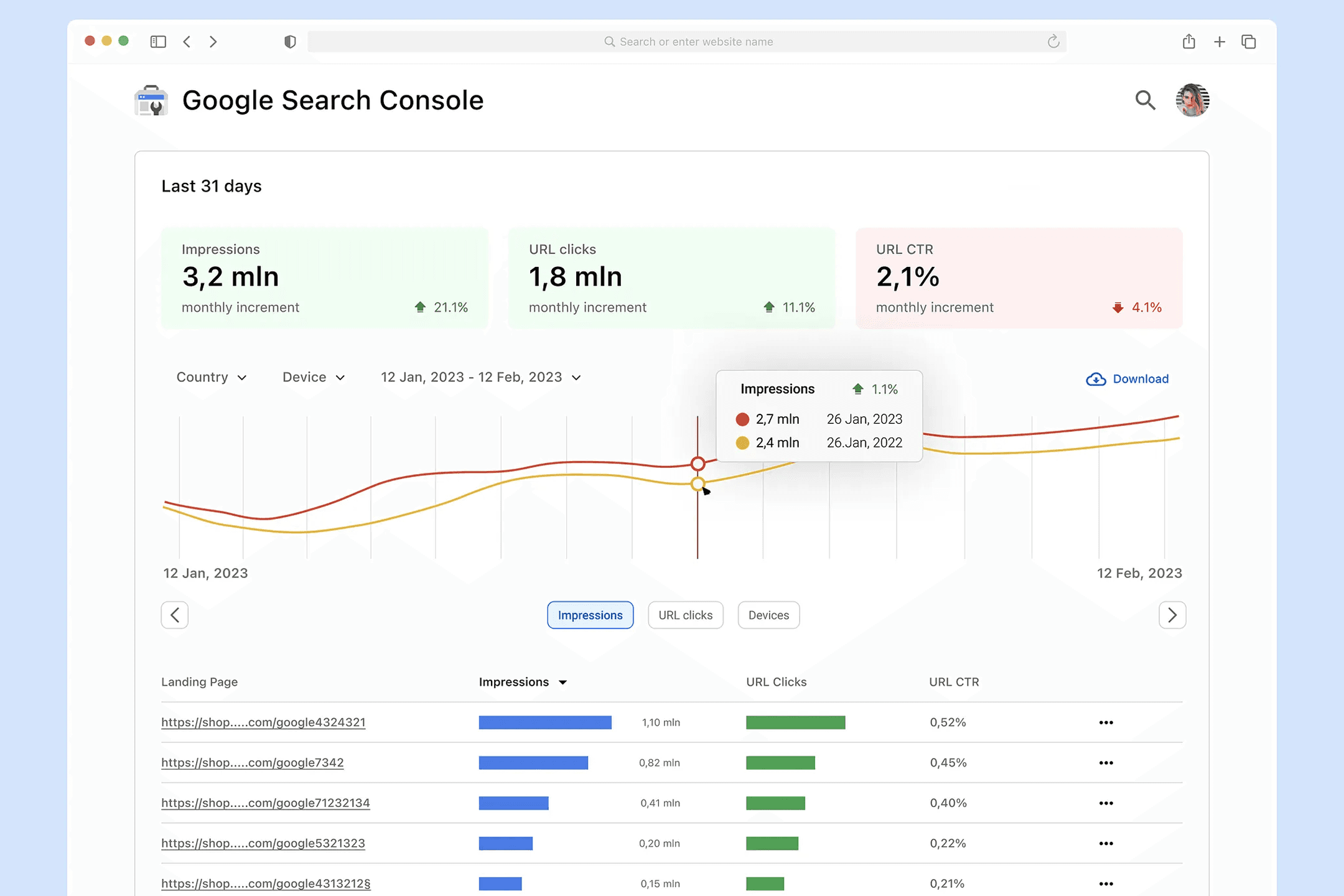
Analytics platforms show which pages receive traffic, where visitors arrive from, and how long they remain on each page. Behaviour tools such as heatmaps and session recordings reveal where users click, scroll, and lose interest.
This information often exposes friction that would otherwise go unnoticed.
For example, behaviour analysis might reveal that visitors spend time reading a service page but rarely click the enquiry button. In other cases, it might show that users begin filling out a form but abandon it before submitting.
Patterns like these are the first signals that something in the experience is preventing people from taking the next step.
The purpose of this stage is not to guess what might improve conversions.
It is to observe real behaviour and identify where the customer journey begins to break down.
Step 2 - Conversion Funnel Diagnosis
Once behaviour data highlights where visitors hesitate, the next step is to examine the entire conversion journey.
This is often called funnel analysis.
Every website has a conversion path, even if it was never formally designed. A visitor might arrive on a blog article, navigate to a service page, and then open a contact form.
Each of those steps forms part of the funnel.
The goal of funnel diagnosis is to identify where visitors abandon the process.
For example, a typical service-business funnel might look like this:
Visitor arrives from Google → Reads a service page → Clicks “Get in touch” → Submits an enquiry form.
If large numbers of users reach the service page but very few open the contact form, the problem likely lies in the page’s messaging, structure, or trust signals.
If users open the contact form but fail to submit it, the friction may exist within the form itself. As in, it could be asking for too much information.
Mapping the funnel makes these issues visible. Instead of guessing where conversions are lost, businesses can see exactly where the journey begins to break down.
Step 3 - Hypothesis Development
Once friction points are identified, the next stage of the CRO process is developing hypotheses about how the experience could be improved.
A hypothesis is simply an informed explanation for why conversions may be underperforming.
Rather than guessing randomly, optimisation specialists form hypotheses based on behaviour data and user patterns observed earlier in the process.
For example, if analytics show that visitors spend time reading a page but rarely click the enquiry button, a reasonable hypothesis might be:
“If the value of the service is communicated more clearly near the top of the page, visitors will be more likely to enquire.”
If users begin filling out a form but abandon it midway through, another hypothesis might be:
“If the enquiry form is simplified, completion rates will increase.”
The key difference between hypothesis-driven optimisation and random experimentation is intent.
Every change is based on a clear theory about what friction exists and why removing it should improve conversions.

Step 4 - Experimentation
Only after behaviour analysis and hypothesis development does experimentation begin.
This is the stage most people usually associate with CRO because it often involves testing changes to determine which version performs better.
Testing may involve:
- adjusting page layout
- improving messaging clarity
- simplifying forms
- strengthening trust signals
- refining calls to action
In some cases, structured A/B testing is used to compare two variations of a page.
In other situations, improvements may simply be implemented and measured over time using analytics data.
The purpose of experimentation is not to test random ideas. It's to validate the hypotheses developed earlier in the process and determine whether removing specific friction points improves conversion performance.
Step 5 - Iteration and Continuous Improvement
Conversion rate optimisation is rarely a one-time project.
As businesses grow, marketing strategies evolve, and customer behaviour changes, websites must continue adapting.
This is why CRO works best as an ongoing process.
Each round of optimisation reveals new insights about user behaviour. Small improvements accumulate over time, gradually transforming how effectively a website converts visitors into customers.
A clearer headline might increase engagement. A simplified form may improve enquiry rates. Stronger trust signals could increase purchase confidence.
Individually, these changes may appear small but together they create a website experience that removes friction and makes it easier for visitors to move from interest to action.
What Do You Do If Your Website Isn’t Converting?
If your website receives traffic but produces very few enquiries or sales, the issue is rarely solved by attracting more visitors.
It usually means the underlying problem lies within the experience visitors encounter once they arrive.
Improving conversions typically involves identifying the points where hesitation occurs and refining the website so that users can move naturally toward the next step.
A good starting point is to analyse how the website currently performs.
Running a quick diagnostic using our Free Website Health Checker can highlight common structural and performance issues that affect usability and conversion potential.
For a deeper analysis of visitor behaviour and friction points, you can also explore our Conversion Rate Optimisation services, where we evaluate the entire user journey and implement improvements designed to increase enquiries and sales.
And if you would like to discuss your website directly, you can always get in touch with our team here.Can
Frequently asked questions: